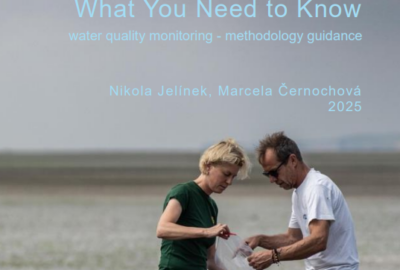


Marcela Černochová and Nikola Jelínek, specialists from the Czech non-governmental organization Arnika, have developed new methodological guidelines for assessing surface water quality in Ukraine. Their work is titled «Preserving Clean Water: What You Need to Know».
What is Surface Water Quality?
Surface water quality is a combination of the chemical, physical, and biological characteristics of rivers, lakes, reservoirs, and other water bodies. These characteristics determine whether water can be used for drinking, irrigation, industry, or for maintaining healthy ecosystems. Water quality is influenced by both natural conditions — such as hydrology, climate, and geological features — and human activities, including agriculture, urban development, and pollution from various sources.
Indicators and Parameters
Water quality monitoring is based on the analysis of physical, chemical, and biological indicators that allow for the assessment of the condition of water bodies and the identification of potential sources of pollution.
Physical parameters include temperature, turbidity, and electrical conductivity. Temperature affects dissolved oxygen levels and biological processes; turbidity reflects the presence of suspended particles; and conductivity indicates the concentration of dissolved ions associated with potential pollution.
Chemical indicators characterize the composition of the water and the presence of contaminants. Key indicators include pH, dissolved oxygen (DO), Biochemical Oxygen Demand (BOD), Chemical Oxygen Demand (COD), nitrates, phosphates, heavy metals, and persistent organic pollutants.
Biological indicators — such as macroinvertebrates, fish, and algae — reflect the long-term ecological state of water bodies. They are sensitive to the complex effects of pollution. Fish and benthic invertebrates are particularly valuable due to their ecological sensitivity.
Sampling Methodology
The accuracy of water quality monitoring largely depends on properly organized sampling. The most common methods include grab sampling, composite sampling, and core sampling of bottom sediments.
Organic contaminants require special attention: they must be stored at 4°C and extracted quickly to avoid degradation. For long-term studies, automatic samplers are used to create composite samples at regular intervals. This allows for the detection of sudden “peak” pollution events or episodic discharges that grab sampling might miss.
Why It Matters for Ukraine
For Ukraine, monitoring surface waters is not just a matter of environmental policy — it is about recovery. Water resources require integrated management and precise scientific support. Monitoring provides an objective picture of the situation, allows for the assessment of the scale of problems, and helps identify solutions. Without these, the restoration of ecosystems, the reconstruction of cities, and the safety of human life are impossible.
You can review the full work HERE.
The methodological guidelines for water quality monitoring were developed within the framework of the project “Strengthening Environmental Monitoring in the Dnipropetrovsk Region During the Armed Conflict.” It was supported by the Czech Development Agency under the Foreign Development Cooperation Program of the Czech Republic.