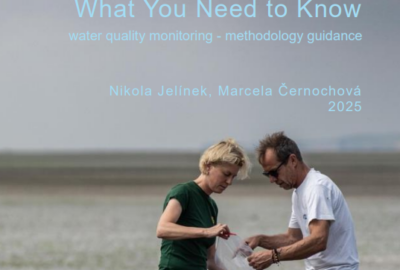

Marcela Černochová and Nikola Jelínek, experts from the Czech non-governmental organization Arnika, have developed new methodological guidelines for assessing surface water quality in Ukraine. Their work is titled “Preserving Clean Water: What You Need to Know.”
The accuracy of water quality monitoring largely depends on properly organized sampling. The most common methods include grab sampling, composite sampling, and core sampling of bottom sediments.
For long-term studies, automatic samplers are used to create composite samples at regular intervals. This allows for the detection of episodic pollution events that grab sampling might miss.
For Ukraine, monitoring surface waters is not just a matter of environmental policy — it is about recovery. Water resources require integrated management and precise scientific support. Monitoring provides an objective picture of the situation, allows for the assessment of the scale of problems, and helps identify solutions. Without these, the restoration of ecosystems, the reconstruction of cities, and the safety of human life are impossible.
You can review the full work HERE:
The methodological guidelines for water quality monitoring were developed within the framework of the project “Strengthening Environmental Monitoring in the Dnipropetrovsk Region During the Armed Conflict.” It was supported by the Czech Development Agency under the Foreign Development Cooperation Programme of the Czech Republic.